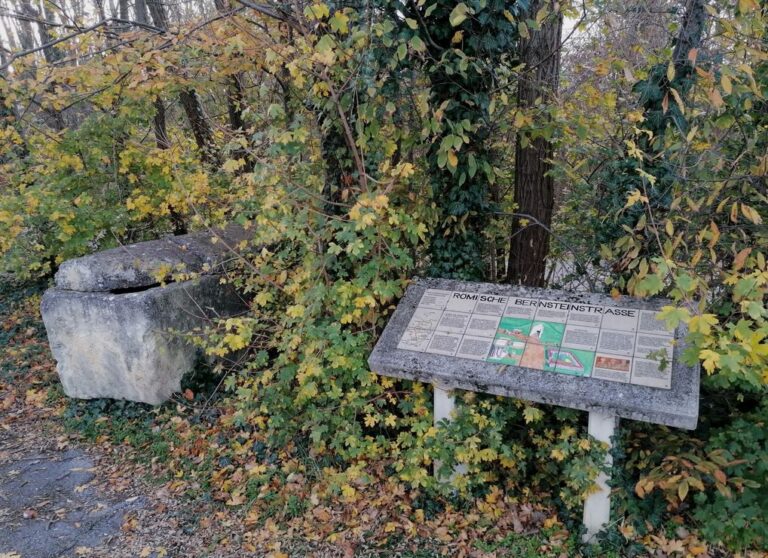
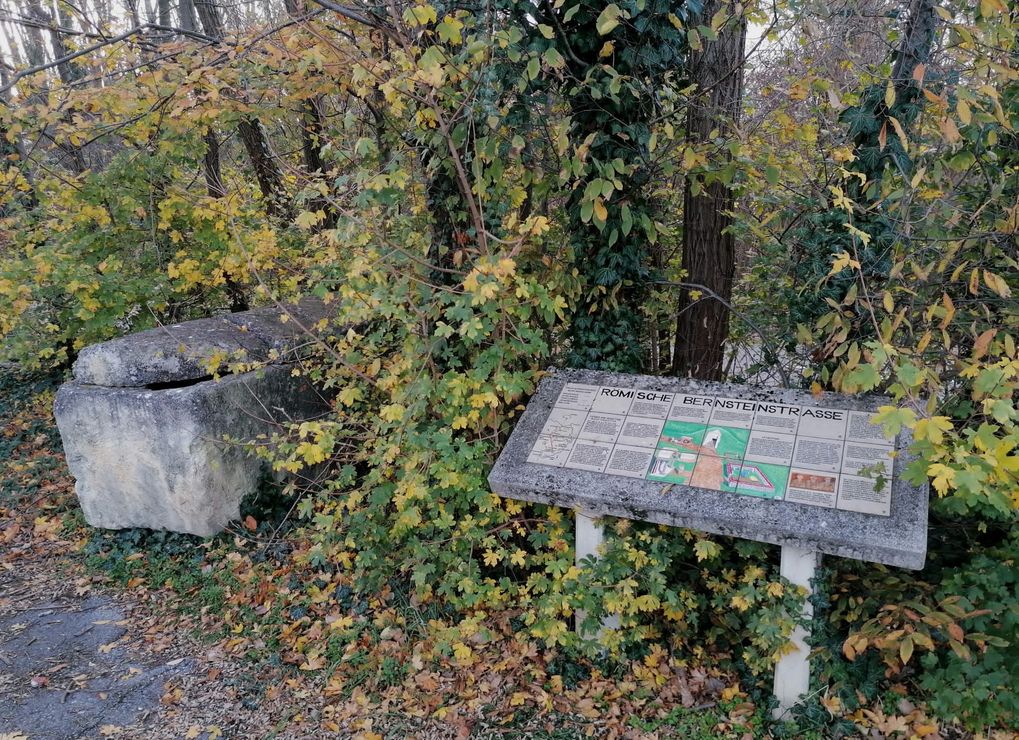
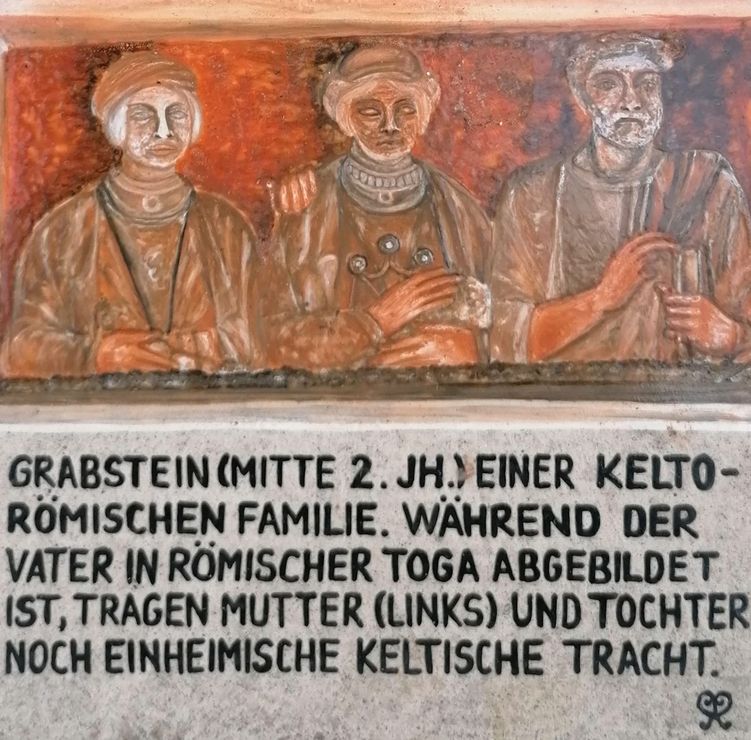
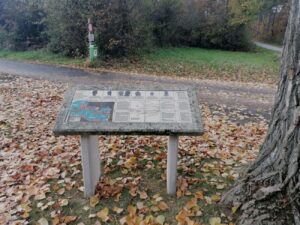
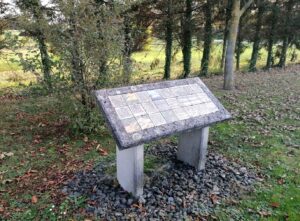
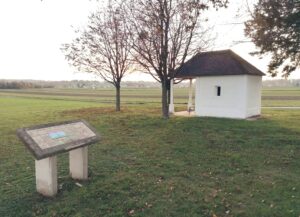
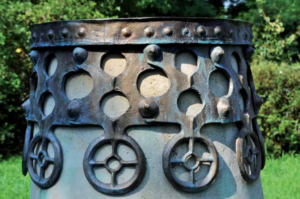
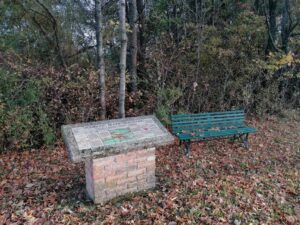
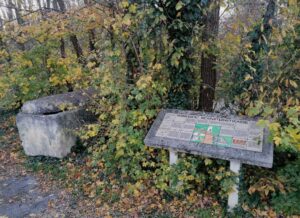
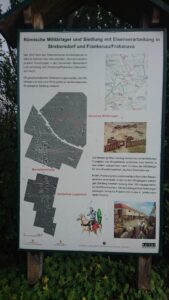
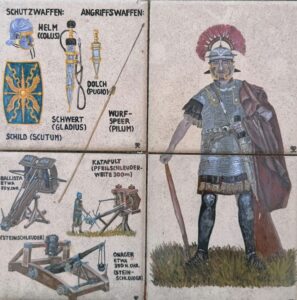
The topic Graves and Gravestones is treated in Deutschkreutz. In the 1st and 2nd centuries A.D. cremation burial was common practice. The graves were built along roads and paths. Due to the mixture of native and Roman burial traditions, different grave forms emerged during the early imperial period. The deceased were incinerated at a specific place (ustrina). Afterwards the ashes were collected in an urn made of glass, clay, or stone. Sometimes the ashes were poured into a simple pit, which was lined with clay or bricks. Then they added burial objects like food and drinks, tools, and personal items. An enclosed coin served as ferry fare to the underworld. In the 1st century A.D. grave mounds were common in the Noric-Pannonian border region. In the mounds there were simple stone settings, slab graves, or brick chambers which could be accessed. Sometimes also little walled grave gardens were created and grave chapels were decorated with frescoes. In the 3rd century A.D. inhumation was getting more and more common. The deceased were buried in wooden coffins, stone sarcophaguses, or brick slab graves. Disused gravestones were frequently used for crypts. During the 4th century A.D. the impoverishment of the population, the spread of Christianity, and grave robbery contributed to the fact that fewer and fewer burial objects were put into the graves.