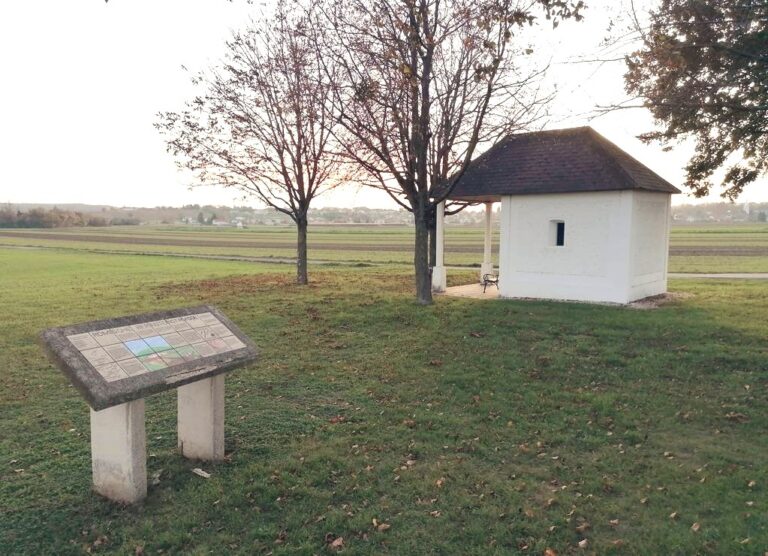
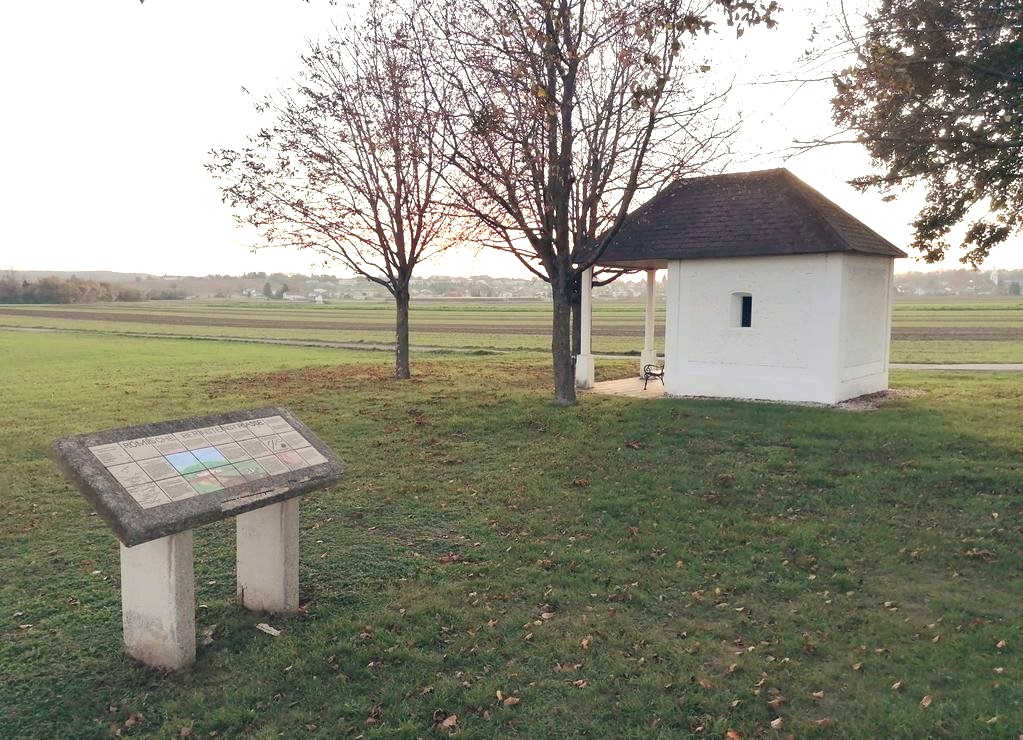
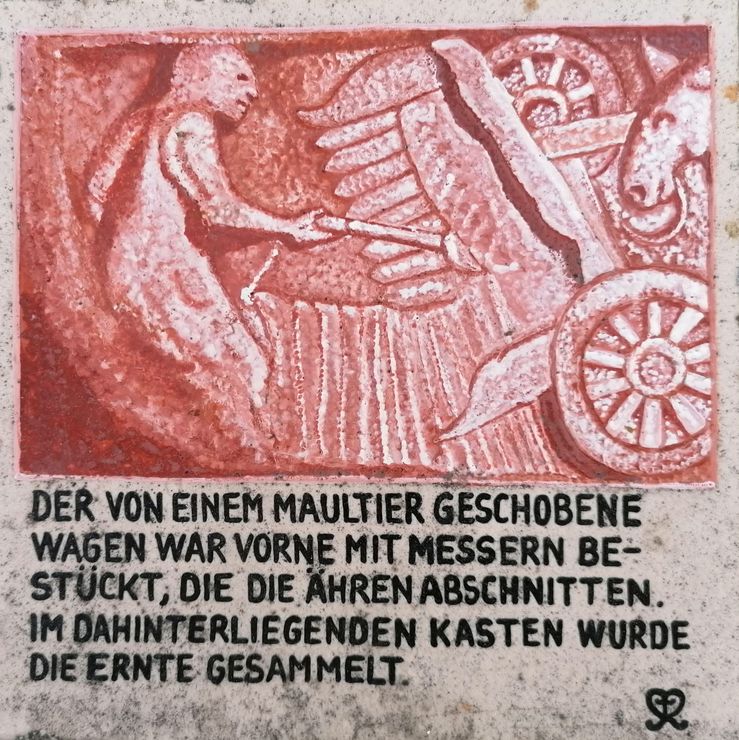
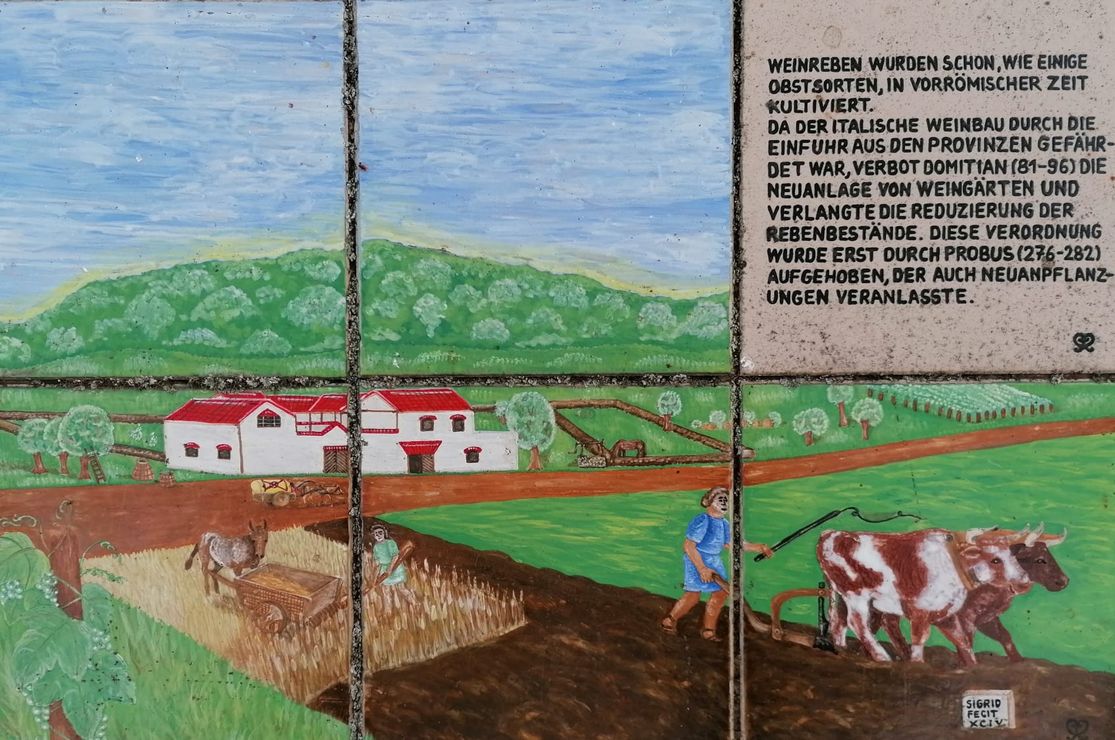
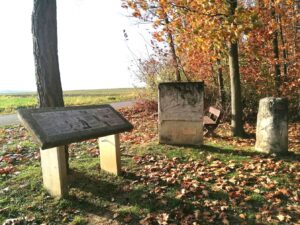
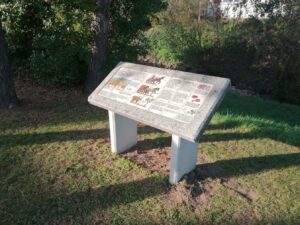
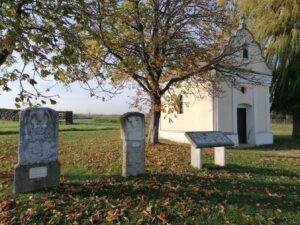
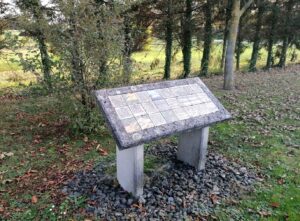
The information panel in Neckenmarkt deals with the topics Roman Manor Houses (Villa Rustica) and Agriculture and Livestock Breeding. According to the size of the Manor, bathhouses, servants’ houses, stables, barns, farm buildings, and workshops were grouped around a central villa. The brick manor house was equipped with a bath, toilets, underfloor heating, mosaics, frescoes, and glass windows. The construction of the outbuildings was more unpretentious. Due to the unstable times of Late Antiquity, they built enclosing walls with towers. The Roman manor houses were responsible for supplying the population with agricultural products. Towns and military camps depended on a secure supply with grain, livestock, and wine. Transport of these goods was carried out via the well-developed network of roads and paths. In Pannonia grain cultivation was pursued on a large scale. In the Late Antique Period this province developed into the granary of the Roman Empire. Millet, oats, barley, wheat, rye, lentils, and field beans were cultivated as staple food. Economically speaking fruit was of inferior importance, vines, like some other types of fruit, had already been cultivated in pre-Roman times. Since Italian viticulture was threatened by the import of wine from the provinces, Emperor Domitian (81 A.D. – 96 A.D.) specifically prohibited the planting of vineyards and he demanded a reduction of vine stocks. This regulation lasted up to the time of Emperor Probus (276 A.D. – 282 A.D.) who eventually repealed it and even initiated new plantings.