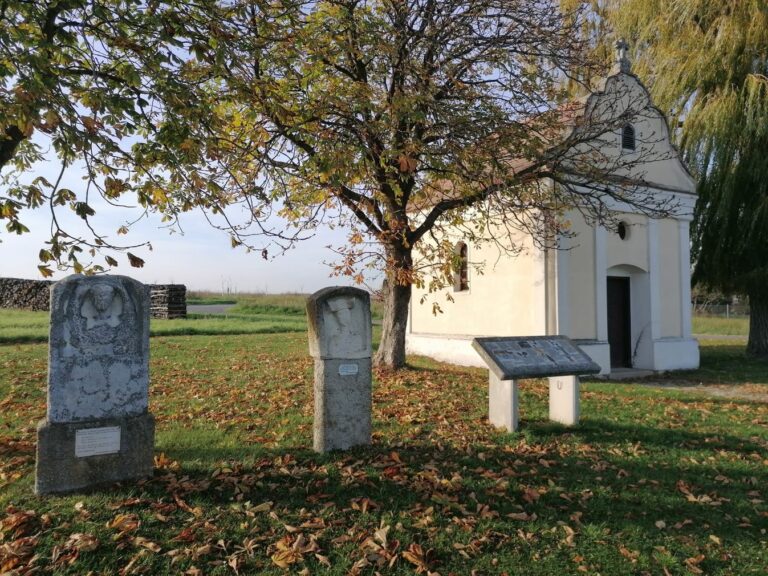
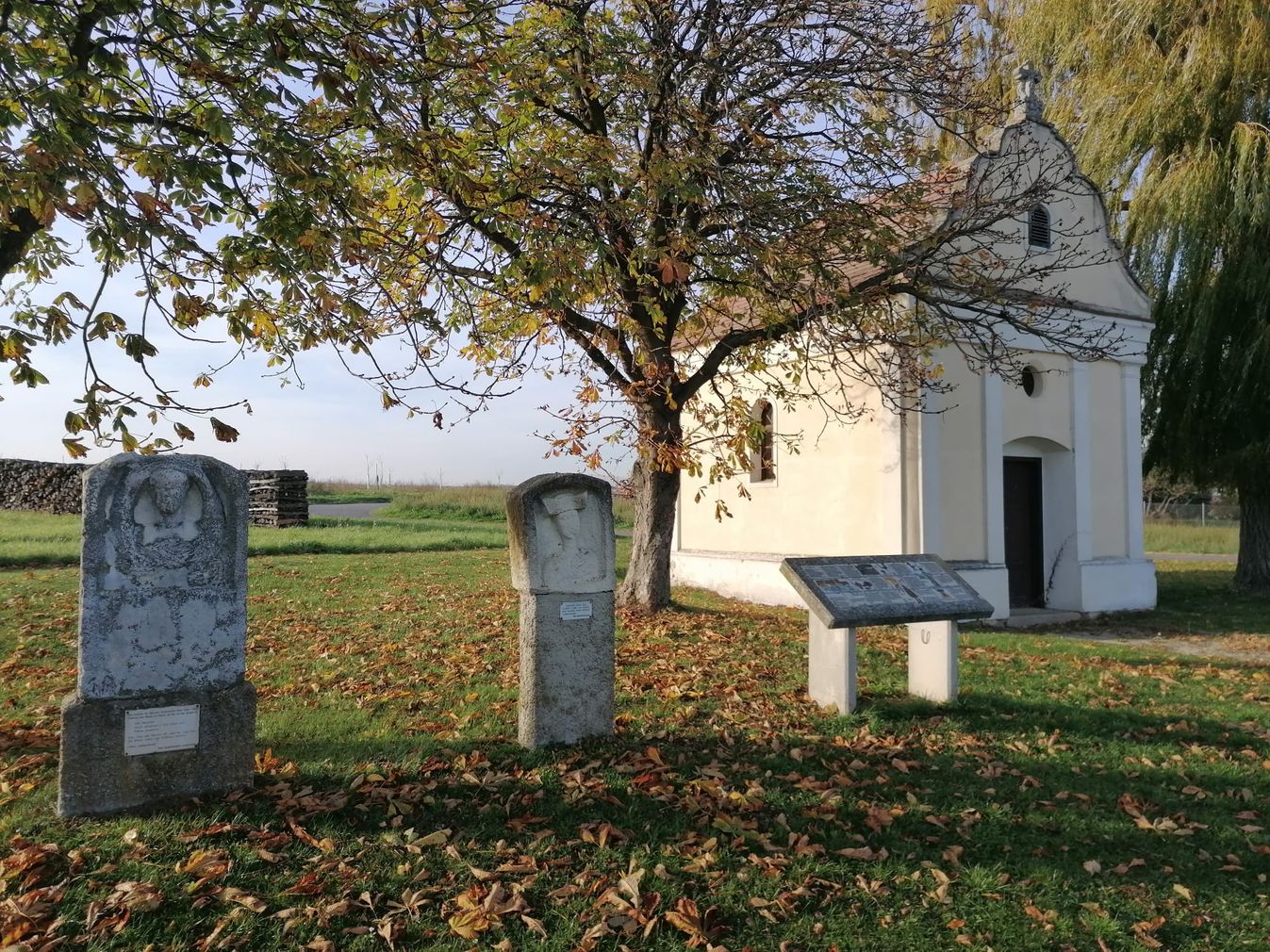
Roman Clothing and Housing are the topics displayed by the information board in Großwarasdorf. As soon as a man possessed the Roman citizenship, he was entitled to wear the toga. It served as a status symbol, which distinguished him from men without citizenship. Calceus was the adequate footwear, which was a kind of boot and which revealed the social status of its owner. At work men normally only wore a simple and often rather short tunica. A Roman woman would wear a tunica and a palla. The tunica was a straight-cut kind of shirt which was made of two rectangular pieces of cloth and which reached down to the ankles. The palla was a kind of cape, which was worn over the tunica when leaving home.
The Roman builders brought great technical progress into our country. Bricks, stone, marble, and mortar replaced the local wooden construction with thatched roofs or shingle roofs, clay-plastered walls and floors of compressed clay. The bricks were produced everywhere and were widely used as building blocks, for roofing, and as floor covering. Some of the bricks bore stamps of their manufacturers, military units, or of private individuals. Stone material was used for foundations, vaults, and as paving stones. Lime mortar, which was mixed with fine sand, was used as binder. When mixed with crushed brick it made excellent flooring. Window glass was already in use, but not yet as clear and transparent as we know it. For heating the rooms they used braziers or open hearths. However, the classic method of Roman room heating was underfloor heating (hypocaustum).